Landscape Intervention
Reinforced concrete, resin, and pigment
Dimensions: 33 x 16 x 6 m
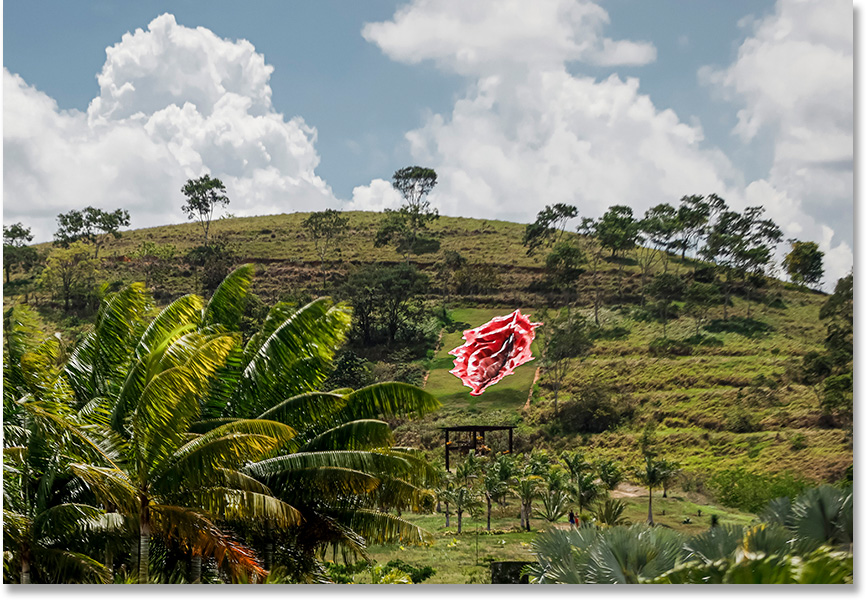
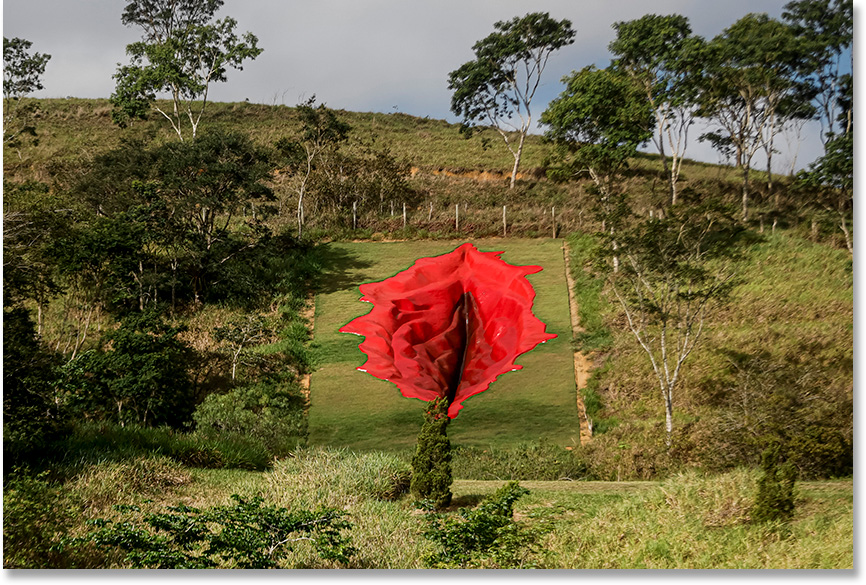
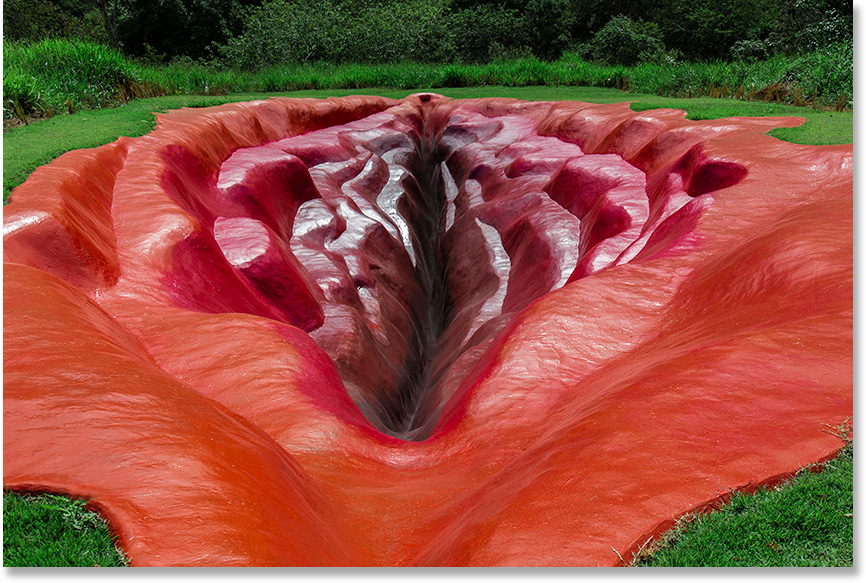
Diva, a wound-vulva 33 meters long, by 16 meters wide and 6 meters deep, is a “prospecting-hole-sculpture” stuck in a land devastated by the sugarcane monoculture and its social traumas.
A deep abscess, the work shows the historical violence against women’s bodies that continue to be daily wounded in many - and, depending on their color or gender, in different and asymmetrical - ways, just like the body of Gaya, our Mother Earth.
In addition to these bodies, Diva also reveals the immeasurable colonial traumas that, against invisibility, continue to fight for reparation. As a wound, Diva herself keeps on re-enacting (since she turns over open wounds) the racial inequalities on which Brazil is based.
Juliana Notari
Recife, Pernambuco, 1975
She currently lives and works in Recife, Brazil
www.juliananotari.com
Artist and researcher, Juliana Notari holds a PhD in Visual Arts from the State University of Rio de Janeiro-UERJ. Her visual and theoretical research has created a body of work that faces its singularities, moving between the biographical, the confessional, the catharsis, or relational practices. With a multidisciplinary approach, she works with several languages: performance, installation, intervention, video, photography, drawing and object.
For years the artist has been developing research on gender and sexism. Questions concerning the presence of the female body in opposition to a society that prides itself on virility and phallocentric have always been part of her poetics.
However, in addition to the issues related to femininity and feminism, issues related to certain important themes surround her work: birth and death, sexuality, the relationship between fiction and confession, trauma, relationships of complicity/testimony, and encounters between animality and humanity. In her work these themes are always crossed by the question of sexuality and death.
Her works dialogue with subterranean, eschatological questions and desires. Issues always rejected by the perfect human being propagandized by the castrating and conservative society. Notari is interested in excavating, removing the layers of what society represses, buffers, and prefers not to deal with. For this reason, the themes of death and sexuality are frequent. Juliana understands that these themes have become taboo precisely because they are extremely poignant and revolutionary.